
Buyers are seeing a substantial increase in choice in Brisbane, Adelaide and Perth heading into the spring selling season.
The number of active listings – the number of new listings in the month, plus the number of listings from previous months that remain unsold – on realestate.com.au in August was up 4% compared to July across the three cities.
That continued a trend we’ve seen this year.
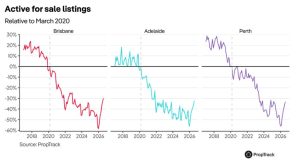
All three cities have had a dramatic increase in active listings. In sum, the number of active listings has jumped more than 50% in Perth and Adelaide since trough, and by nearly 70% in Brisbane.
Some of that increase is seasonal: the end of year shutdown means there are always fewer properties available for sale in December and January.
However, that dramatic a surge also reflects market conditions. All three cities have had more new listings hitting market in recent months and homes are taking longer to sell, meaning there are more homes from previous months still listed.
The number of new listings in the smaller capitals in recent months was circa 20% higher than a year earlier in each of the three cities in August. In sum, across the three cities, there were 19% more new listings in winter than the same time last year. That’s clearly contributed to more choice for buyers.
At the same time, homes are typically taking longer to sell, meaning more of the homes listed in previous months are still listed for sale. The typical time a home is listed before selling has increased by about two weeks in Perth and Brisbane since earlier in the year, and by about a week in Adelaide.
Even so, active listings remain well below pre-pandemic levels in all three cities. All are down circa 30% on where they were in March 2020 – and even more relative to what was true in the last few years of the 2010s (which were fairly soft property market conditions, particularly in Perth).
Limited stock for sale has supported home price growth in the smaller capitals in recent years. With that now changing, and rates rising, we are seeing home prices falling in these cities. Even so, the falls to date remain more modest than what we’ve seen in Sydney and Melbourne.