
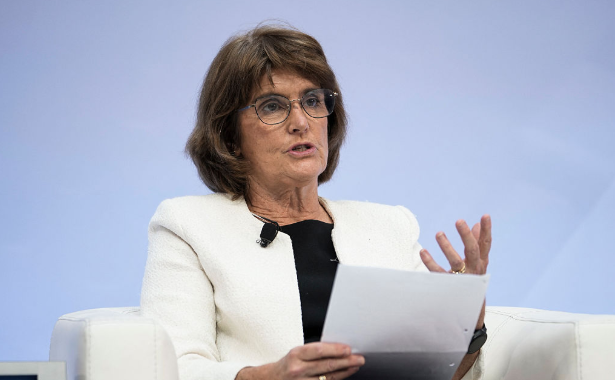
Deep divisions inside the Reserve Bank over how hard to squeeze borrowers have left homeowners facing a nervous wait ahead of December’s rate call.
Minutes from the bank’s most recent rates decision meeting earlier this month have shed more light on the ongoing tug of war between the nine members of its monetary policy board.
Disagreement between members has been commonplace this year, with three of its seven meetings resulting in split decisions.
While the odd number of board members prevents any potential decision stalemates, the lack of cohesion underscores the amount of uncertainty in the economy as the end of the year approaches.
A total of five hikes have been passed through since February, the most since the Global Financial Crisis outside of the Covid recovery, though the RBA says the effects are yet to be felt.
All three of the board’s split decisions this year – March, May and November – have been in meetings that then resulted in a rate hike.
RBA governor Michele Bullock has consistently warned monetary policy adjustments can take 12 months or more to have an impact, a reality that seems to be the sticking point among MPB members over how fast to push through hikes.
What does that mean for December? Households will have to wait and see. One more rate hike this year would see households head into Christmas with a cash rate of 5.1% and the pressure of another increase to minimum mortgage repayments.
The bank says it is poised to act where necessary, with Ms Bullock warning the bank is still contending with of the plethora of threats to economic prosperity and stability.
“Everything’s just AI, geopolitics, conflicts in the Middle East and Ukraine. It’s just all very uncertain,” she said in Sydney on Monday.
“We already had inflation above target in the latter half of last year and early this year, and we’d already started raising interest rates before the Middle East conflict started, and oil prices started to rise. They’ve made it worse. They’ve made it more challenging.”
Ms Bullock told attendees at the Australian Securities and Investments Commission forum that interest rates could not affect oil prices rises, with the board unsure as to how much weight to place on the risks which could further drive up inflation.
“It’s quite true that interest rates do not address that issue, but what we can do with interest rates is we can decrease demand and ease the pressure, which is coming from excess demand on the economy,” she said.
Board members who have backed rate hikes this year have focussed on so called ‘upside’ risks to inflation – situations or factors likely to make inflation rise further.
The board has identified these risks as elevated oil prices, AI spend, and households and business behaviour changes associated with viewing high interest rates as the new norm.
On the flip side, MPB members in favour of holding rates steady have consistently called for more information and more proof of how tightening is already working, arguging downside risks deserve more focus.
One argument in November was that the 100 basis points of tightening already delivered this year were still working its way through the economy.
“Members noted that the full effects of that tightening on the economy were not yet apparent in the data and that it was uncertain how large an impact it would have, given the long and variable lags,” the minutes read.
No matter where the RBA board decides to go with its final rates decision of the year, concern over high inflation is unanimous.
“Inflation in the September quarter had been stronger than expected in August,” the statement read.
The board pointed specifically to inflation for market services, which it said was “noticeably stronger’ than expected and among the most sensitive to domestic economy conditions.
In August, that figure included recreational spending on sports and cultural services, meals and takeaway food and insurance and financial services.
Black Friday and pre-Christmas spending is also expected to add to inflation in the next few weeks, even if it is more subdued than other years.
Despite this, the board meeting minutes reveal members are confident in households’ ability to withstand cost of living pressure, likely giving more weight to members in favour of more tightening.
The minutes note households have more financial flexibility and less effective debt exposure than the headline numbers might imply, while most households have “sizeable” balances held in offset accounts.
The board contrasted this situation specifically against the Global Financial Crisis period, which is the last time interest rates were as high as they are now.
“Household credit to income ratio was significantly lower than its average following the GFC,” the minutes read.
“These substantial buffers could mean that the cash flow channel of monetary policy was not having as strong an effect on spending behaviour as might otherwise have been the case.”
While both household and government spending continuing to hold strong, all four of Australia’s big banks expect the RBA to hold off on another rate hike when it meets from 7-8 December.
The RBA has made a December change to interest rates 11 times in total since 1990, records show, making it a fairly uncommon month for hiking or cutting.
As of Tuesday, markets were pricing in just a 3% chance of a hike.